
Cupabia Beach: the great wild bay in the north of Valinco
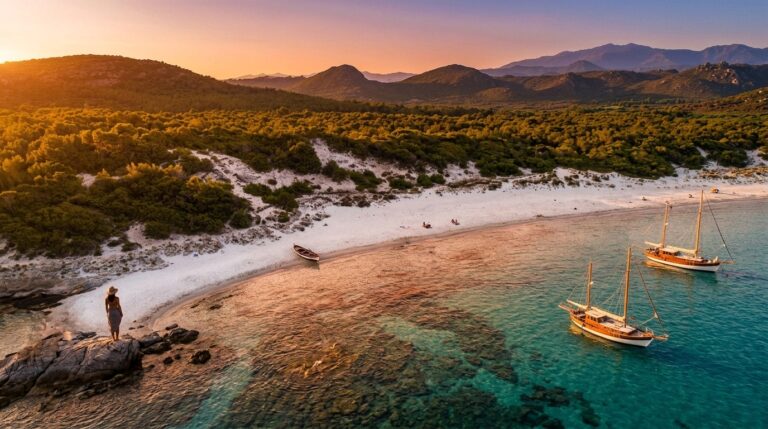
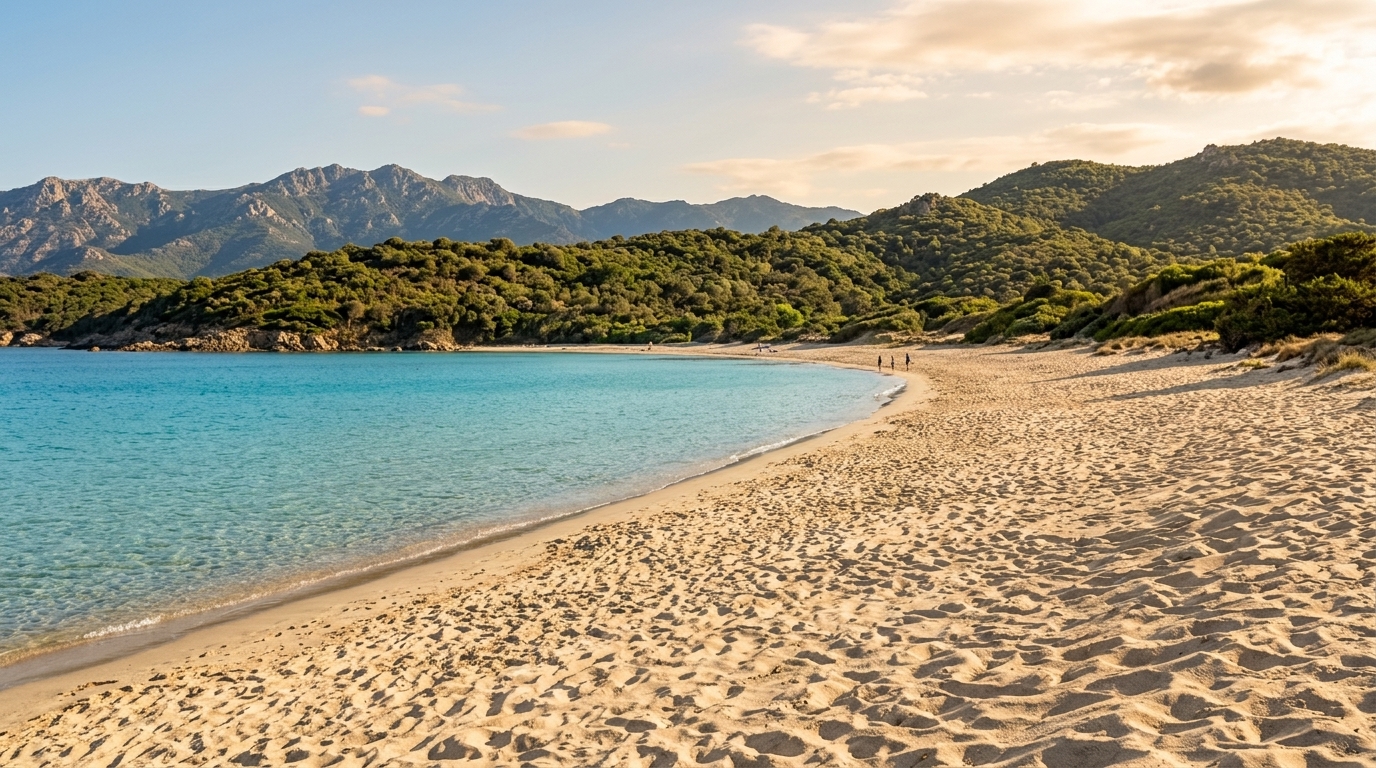
Cupabia Bay remains one of the finest beaches on Corsica’s west coast, still relatively untouched by heavy tourism. Located in the municipality of Coti-Chiavari but far more accessible from the Valinco, it is a vast expanse of white sand divided into two sections by rocky outcrops, bordered by dense vegetation of maquis and Aleppo pines that descends almost to the shoreline.
The limpid blue water, the gradual shelving of the seabed, and the near total absence of development make it a beach particularly cherished by those in the know, a bay that has retained its wild character where others have succumbed to heavy tourist development.
Access: via the D155 from Serra-di-Ferro
The most straightforward approach to Cupabia is via the D155 departmental road, from Serra-di-Ferro (on the Valinco side) or by taking the coastal road from Propriano. An approach via Coti-Chiavari exists in theory, but the route is longer and less frequently travelled.
A car park is located immediately above the beach. Allow a few minutes on foot to descend to the sand. The car park frequently reaches capacity in July-August, particularly in early afternoon; an early arrival is strongly recommended.
Two beaches, two atmospheres
The rocky outcrops that divide the bay in two effectively create two rather different zones.
The northern section is the longest and most open; it is here that families concentrate, with the shade of the pines in the background, and the restaurant “A Cala di Cupabia” which offers Corsican cuisine and panoramic views over the Gulf of Valinco. The southern section, more secluded, is frequented more by those seeking tranquillity. The passage from one to the other takes only a few minutes on foot via the path or directly by swimming if the sea is calm.
The seabed: sand, seagrass meadows, limpid waters
The descent into the sea is gradual, the bottom remaining sandy for the first several tens of metres, which reassures those bathing with children. Further out, the seagrass meadow of Posidonia oceanica begins, which in part explains the optical clarity of the water: seagrass filters, stabilises the sand and protects against erosion.
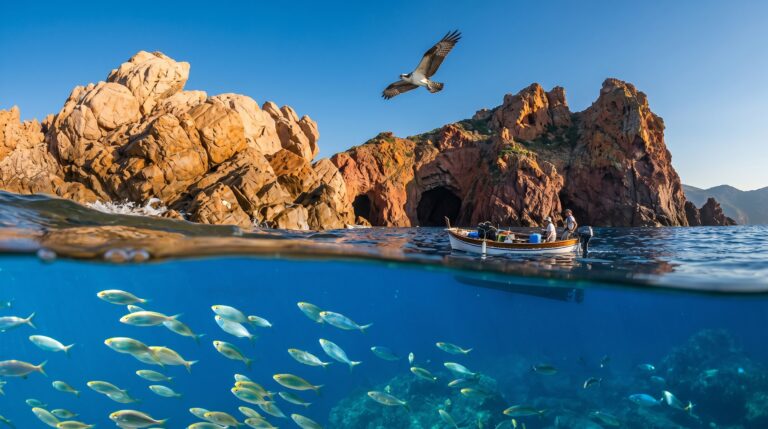
For those interested in snorkelling, the lateral rocks and the edges of the outcrops offer a reasonable area for observation, schools of small fish, starfish, occasionally some sea bream.

Propriano
Travel Book AEC CollectionThe context: the Gulf of Valinco
Cupabia is one of the northern beaches of the Gulf of Valinco, which extends from the Campomoro point in the south to the outskirts of Serra-di-Ferro. This gulf is one of the largest in South Corsica and one of the least developed. Propriano, the principal town of Valinco (15km south of Cupabia), remains human in scale, with a port, restaurants, and access to markets.
The hinterland opens quickly on to the Aiguilles de Bavella and the hilltop villages of Taravo and Alta Rocca, which add a mountain dimension to beach days.
When to visit
Like the majority of Corsican beaches, Cupabia is crowded in July-August during midday hours. Mornings before 11am or late afternoon (after 5pm) are the quietest periods in high season. May-June and September remain the best compromise: water still (or already) at 20-22°C, moderate footfall, sufficient pine shade for the hottest hours.
Planning a stay near Propriano
AEC Collection curates and represents premium villas and homes in Propriano, Olmeto, Sollacaro and around the Gulf of Valinco. The beach is to be discovered at your leisure.

Our properties in Propriano
Exceptional chalets, villas and apartments, selected by our agents for their standing.
View the properties in Propriano →