
Scandola Nature Reserve: red porphyry, ospreys and UNESCO heritage since 1983
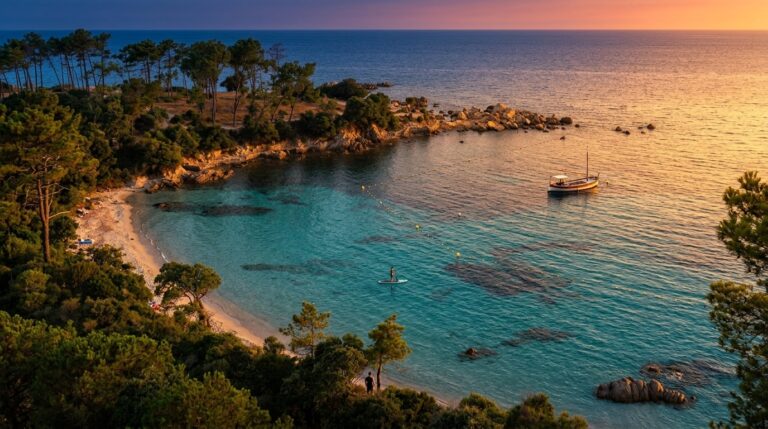
Scandola Nature Reserve is one of the rare sites worldwide inscribed on UNESCO’s Natural World Heritage list since 1983, in the category of mixed sites (land and sea). Established in 1975 and managed by the Parc Naturel Régional de Corse, it protects a stretch of coastline and seabed on the west coast of Corsica, accessible only by boat, with no road or public path leading to the water.
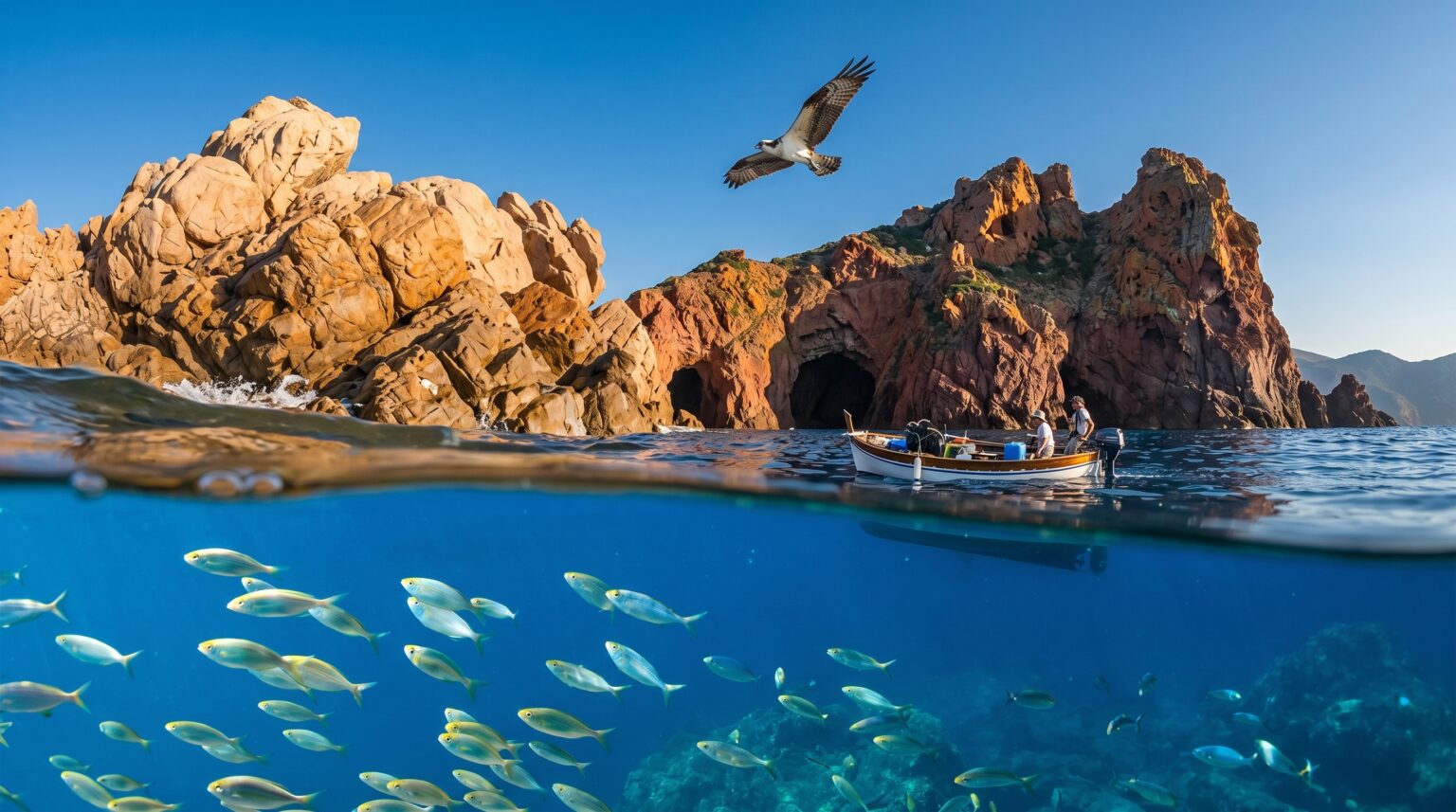
It is one of Europe’s most pristine Mediterranean ecosystems: fishing has been entirely prohibited for over fifty years, allowing populations of grouper, moray eel, dentex and dusky grouper to reach exceptional densities. Above water, the ospreys, the emblematic raptors of the site, nest in the most inaccessible crevices.
Red porphyry, a visual signature
The geology of Scandola is as spectacular as its wildlife. The cliffs and ridges that plunge into the sea are composed of red porphyry, a volcanic rock born from intense eruptions 250 million years ago. The gradual cooling of the lava flows created this stone with its vivid tones (red, orange, ochre), streaked with dark veins, shaped into jagged forms.
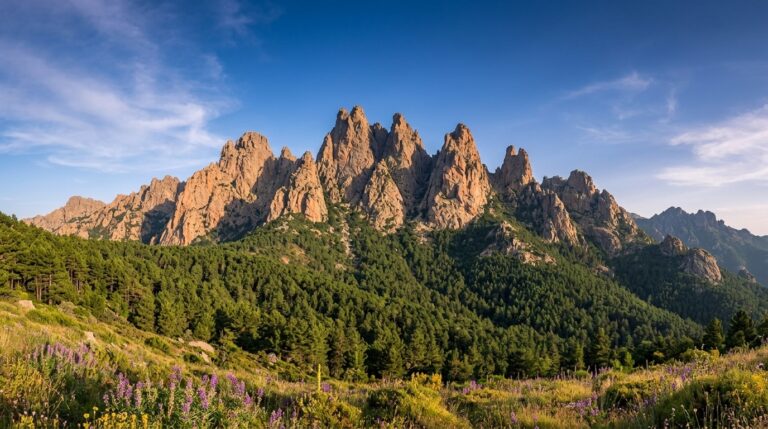
Marine erosion has sculpted caverns, arches, isolated pinnacles and inaccessible coves into this rock. The result is one of the Mediterranean’s most singular coastal landscapes, compared by some naturalists to the coastline of Madeira or the Azores, with no equivalent in mainland France.
The osprey, sentinel of the reserve
The osprey (Pandion haliaetus) is one of the rare marine raptors of the Mediterranean. The west coast of Corsica, and Scandola in particular, is home to one of the last Mediterranean populations of the species, approximately twenty breeding pairs on the coast between Calvi and Cargèse, several of which nest within the reserve itself.
The breeding season, from 15 February to 31 August, is subject to enhanced protection measures: navigation and mooring prohibited within a radius of 250 metres around identified nests. These seasonal restrictions may limit access to certain areas of the reserve during the peak tourist season, a point to verify with the tour operator before booking.
Excursions from Porto
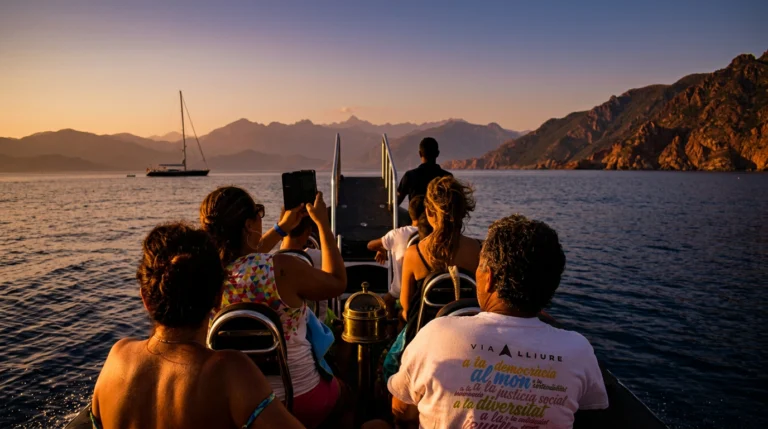
Porto, at the mouth of the river of the same name, is the natural embarkation point for Scandola, less than an hour’s voyage to the entrance of the reserve. Several operators offer excursions:
Semi-rigid boats (12 people) are swift and manoeuvrable, allowing close approach to the cliffs and entry into certain caves inaccessible to larger vessels. Expect 2.5 to 3 hours for a standard excursion. Larger speedboats (50 to 80 passengers) offer greater comfort, but do not venture into narrow coves; they pass at a distance.
Combined excursions Scandola + Girolata + Calanques de Piana are the most comprehensive, allow 3.5 to 4 hours, typically including a swimming stop or lunch at Girolata, a fishing village accessible only by boat or on foot (the Facteur trail, 1.5 hours from the Croix pass).
When to visit
The suitable season runs from April to October, with quieter periods in May-June and September. July-August concentrates visitor numbers, which may congest departures. Mornings are the best windows: calmer sea, golden light on the red cliffs, fewer boats encountered en route.
Planning a stay in the Gulf of Sagone
AEC Collection selects and represents luxury villas and homes in the Gulf of Sagone, Cargèse and around Piana. Excursions to Scandola are booked directly with operators departing from Porto.
Our properties in Sagone
Exceptional chalets, villas and apartments, selected by our agents for their standing.
View the properties in Sagone →