
Lido de Sète to Marseillan: 12km of sand between sea and Thau lagoon
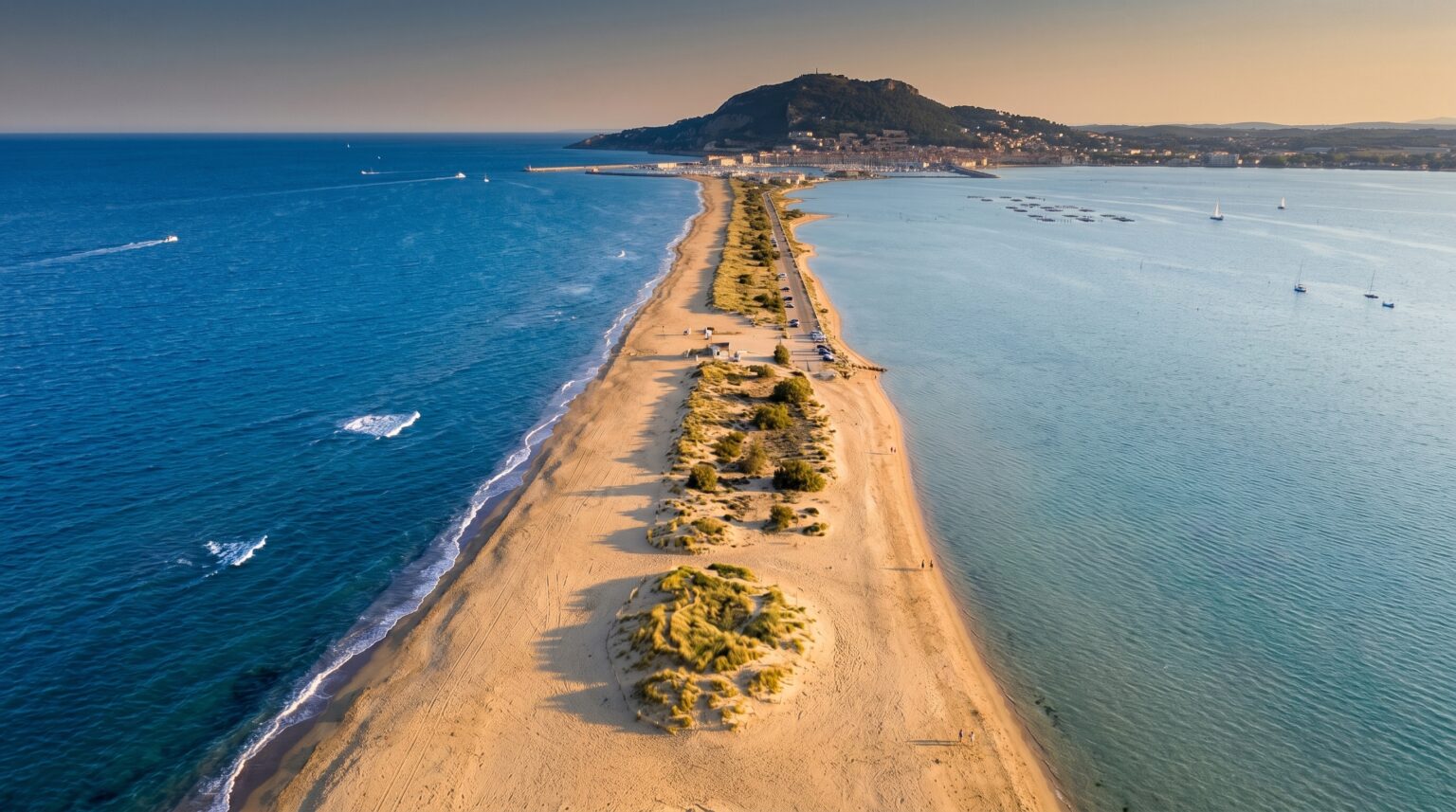
The Lido de Sète to Marseillan is not a beach: it is 12 kilometres of sandy strip separating the Mediterranean Sea from the Thau lagoon. A mere line of sand, scarcely a kilometre wide in places, which shields the lagoon from swell and constitutes one of the most singular sand spits along the French coastline.
This geographical singularity, the sea on one side and the lagoon on the other, only a few hundred metres apart, defines the bathing experience at the Lido. The salt waters of the Mediterranean to the east, the brackish and warm waters of Thau to the west, fine sand along its entire length.
A sand spit designated Natura 2000
The Lido is classified as Natura 2000 and protected by the Conservatoire du Littoral, which owns 500 hectares within its boundaries. This designation enabled, between 2005 and 2012, a major European project to combat coastal erosion: the road was moved inland, dunes were restored, sand fences reinstalled, and marram grass replanted. The sand spit had lost several metres of width over fifty years; the project stabilised it.
The site is home to exceptional biodiversity: 205 species of native plants recorded, including Jupiter’s Beard and Sea Lily, two rare and protected species. On the fauna side, the Thau lagoon attracts greater flamingos, herons, egrets and numerous migratory birds. Part of the spit has restricted access to preserve nesting grounds.
The green way and access to beaches
As part of the 2005-2012 project, a green way was created along the entire length of the Lido, a shared path for pedestrians and cyclists, separated from the road, with occasional access points to the beaches. It can be covered in approximately 2 hours by bicycle or in a day on foot with swimming stops. Several car parks are positioned along the route, spaced 1 to 2 kilometres apart.
The beaches are freely accessible, without omnipresent beach bars. A few restaurants and bars open seasonally along the route, but the whole remains more natural than most beaches on the Languedoc coast, which is one of its strong points for visitors seeking tranquillity.
Lagoon side: shellfish farming and seafood
The Thau lagoon, situated on the western side of the Lido, is one of France’s largest saltwater lagoons. It is also the Mediterranean’s leading basin for oyster and mussel production. Shellfish beds stretch as far as the eye can see, particularly visible from the green way at sunset.
The villages of Bouzigues, Mèze and Marseillan, perched on the northern and western shores, rely largely on this industry. Several producers offer tastings at their operations: Bouzigues oysters, Thau mussels, cuttlefish bourride.

Sète
Travel Book AEC CollectionWhen to visit
The best periods are May, June and September, October: water still (or already) warm, moderate crowds, striking light. July and August remain the busiest months, though the 12km of beach absorbs visitor numbers without becoming crowded. For birdwatchers, the mild winter (December, February) offers opportunities to observe greater flamingos in residence.
Planning a stay in Sète
AEC Collection selects and represents houses and apartments in Sète, on the heights of Mont Saint-Clair and around the harbour. The green way, beaches and shellfish restaurants are to be discovered independently.

Our properties in Sète
Exceptional chalets, villas and apartments, selected by our agents for their standing.
View the properties in Sète →