
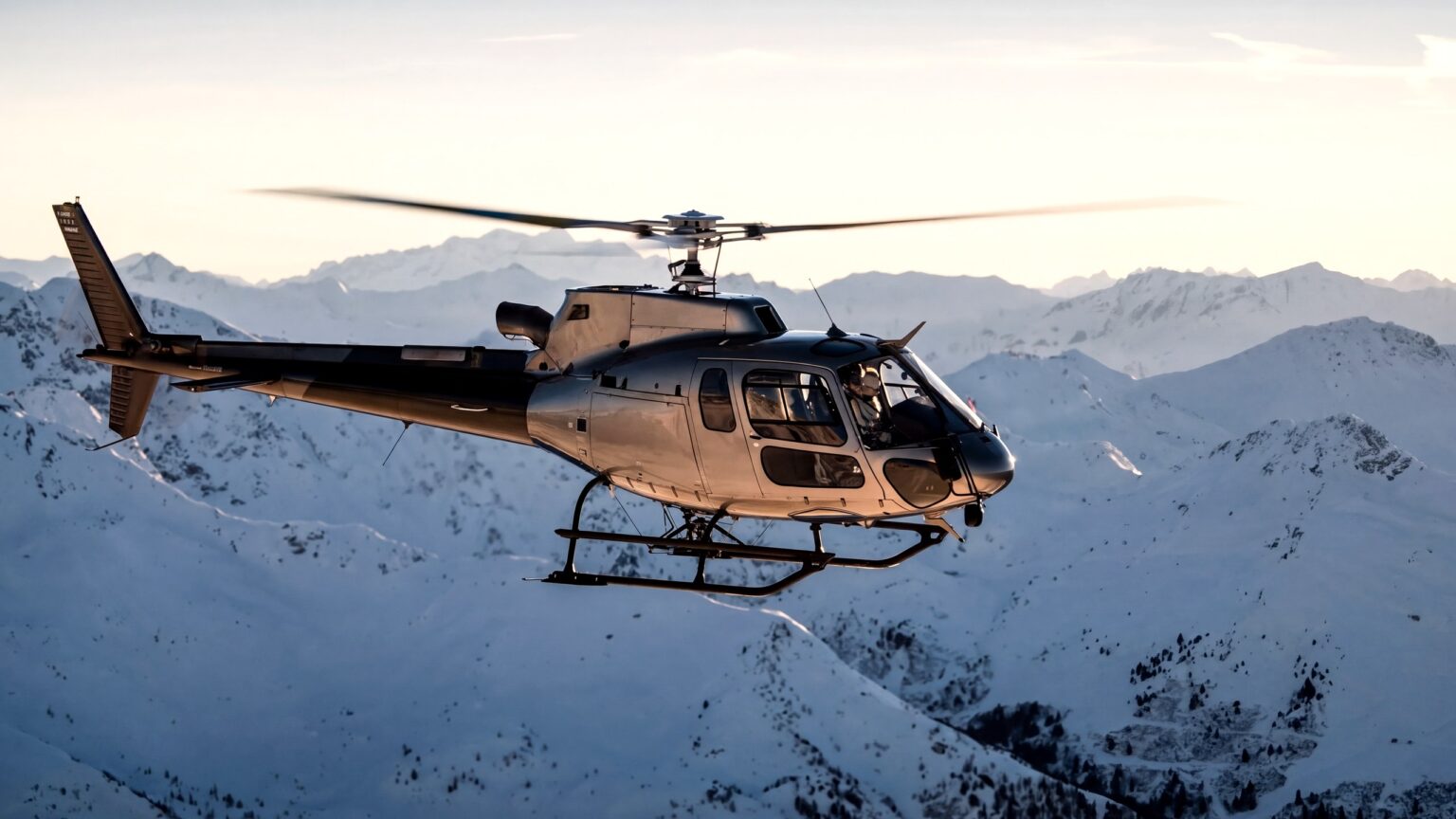
From the air, the Mont Blanc massif takes on a different scale. The Mer de Glace becomes a frozen river, the north face of the Grandes Jorasses a sheer wall, and the summit, at around 4805m, a ridge of snow above the clouds. About twenty minutes in a helicopter is enough to get close. You still need to know where to take off from, what you will see on each length of flight, and what the law allows. Here is how it works, one departure point at a time.
Mont Blanc flights at a glance
- Flight time: 15 minutes to an hour by helicopter, depending on the departure point and the route.
- Departures: Megève altiport, Argentière at the top of the Chamonix valley, and Annecy airport.
- By plane: from Megève altiport, Chambéry or Courchevel.
- The rule: you fly over, you do not land. From 1 June to 15 October, planes and helicopters with combustion engines may not fly lower than about 300m above the terrain around the summit.
- When: all year round, in good weather.
Where Mont Blanc flights take off from
The closest departure point to the chalets of Megève is Megève altiport, up at Cote 2000, where a helicopter company offers 20, 30 and 50-minute flights towards Mont Blanc. In the Chamonix valley, a company that has been operating since the 1990s flies from Argentière, at the foot of the glacier of the same name, with flights of 15, 20 and 30 minutes. From Annecy airport, a one-hour flight crosses the Aravis and Megève before heading up towards the massif. Flights also leave from Switzerland.
One mistake comes up again and again: there is no heliport in the centre of Chamonix for sightseeing flights. The two helipads listed by the civil aviation authority are reserved, one for the hospital’s medical transport, the other for rescue services. The flights we found advertised “from Chamonix” actually leave from Argentière, a village in the same municipality at the top of the valley, from Megève altiport or from Annecy airport. For more on the altiport and what you will find there, see our page on Megève altiport.
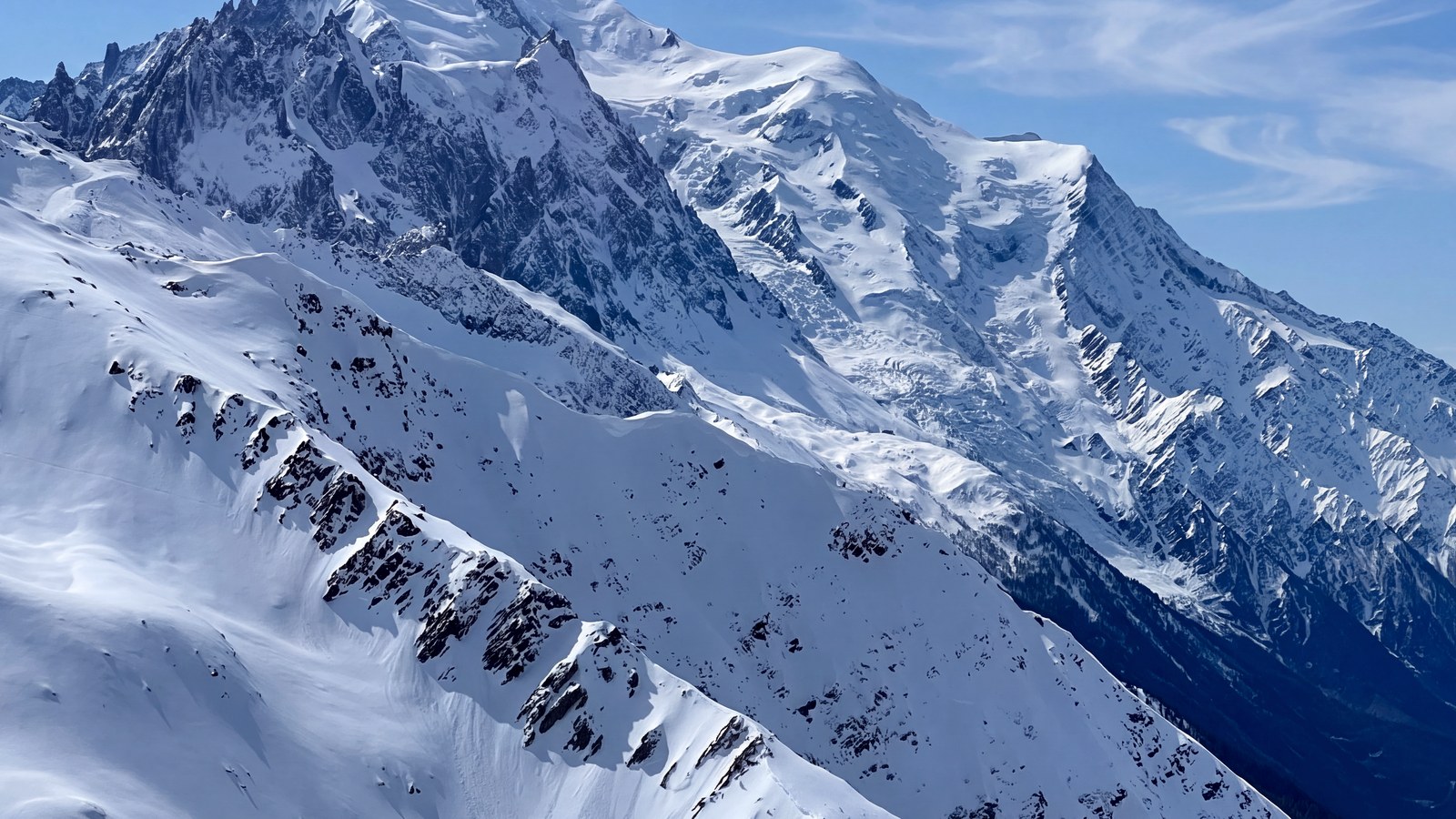
Touring Mont Blanc by helicopter: 15 minutes to an hour
From Argentière, each length of flight has its own route. In 15 minutes, you fly up the Argentière glacier facing the north walls of the Aiguille Verte, the Droites and the Courtes, follow the north face of the Grandes Jorasses, then come back down over the Vallée Blanche, the séracs of the Géant and the Mer de Glace. In 20 minutes, the flight closes in on Mont Blanc itself, between Mont Blanc du Tacul, Mont Maudit, the Dôme du Goûter and the Aiguille du Midi. In 30 minutes, it takes in the whole massif, including the Italian side and the Bionnassay area.
From Megève, the 20 and 30-minute flights approach the summit, and the 50-minute flight adds the glaciers and the Vallée Blanche. From Annecy, the one-hour flight runs over the Mer de Glace, the Grandes Jorasses, the Glacier du Géant, the Col du Midi and the Aiguille du Midi, at 3842m, before returning by way of the Val d’Arly. None of these routes includes a landing in the mountains: you come back to where you started.
Flying over Mont Blanc by plane
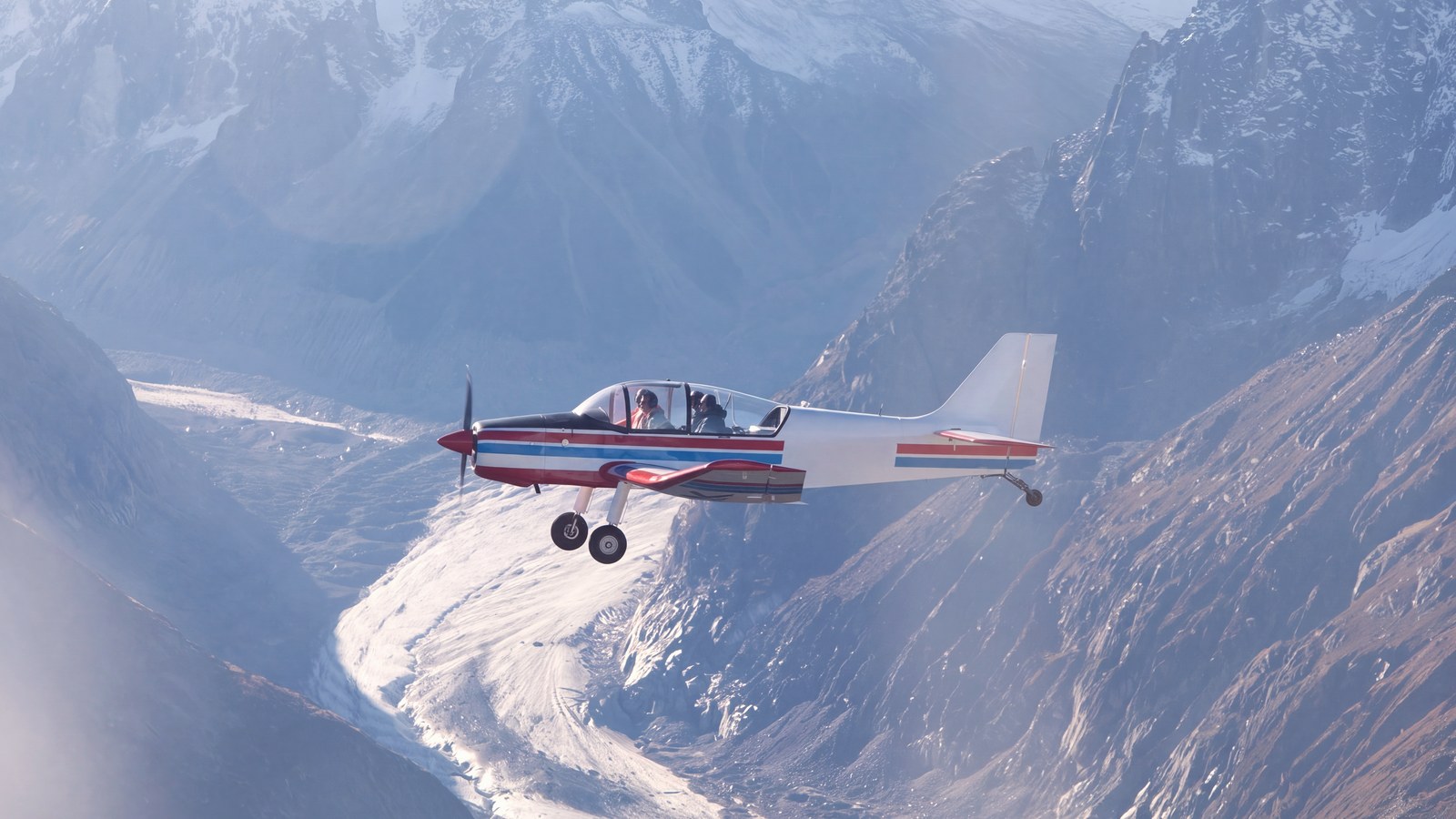
A plane is the other way to see the massif. At Megève altiport, one company flies small single-engine aircraft with large canopies, fitted with skis in winter, on four routes of 10 to 40 minutes over the Chamonix valley, the Bossons glacier, the Mer de Glace and the Vallée Blanche. These planes fly at between 2300m and 3000m, so they follow the line of the massif rather than passing over the summit. Another company offers Mont Blanc flights by plane from Chambéry or Courchevel altiport, all year round and in good weather.
The rules: flying over is allowed, landing is not
In the mountains, French law forbids dropping off or picking up passengers for leisure anywhere other than an aerodrome, and landing for leisure outside aerodromes and authorised sites. It also forbids advertising such flights (articles L363-1 and L363-2 of the French Environment Code). It does not forbid flying over the mountains: a panoramic flight leaves from an aerodrome and returns to it without landing. Around the summit, a prefectoral order from 2020 protects 3175 hectares across Chamonix, Les Houches and Saint-Gervais, and bans all leisure landings there.
Overflights have rules of their own. From 1 June to 15 October, in the zone covering the summit and its approach routes, on the Saint-Gervais side as well as the Chamonix side, planes and helicopters with combustion engines may not fly lower than 1000 feet, about 300m, above the terrain: they go around the zone or fly higher. Rescue services, state services, mountain hut supply flights, aerial work and crewed electric aircraft are exempt. For the rest of the year, the zone is not active. Around the massif, the Aiguilles Rouges nature reserve, facing Mont Blanc, bans powered aircraft from flying over it lower than 1000m above the ground, and the Contamines-Montjoie reserve bans all overflights lower than 300m.
Conditions: weather, age, weight
Everything depends on the sky. These are visual flights: the pilot has to be able to see the terrain, and if cloud covers the peaks, the flight is moved to another day, or cancelled free of charge with some companies. Beyond that, conditions vary from one operator to another. At Megève, the helicopter flight is open to anyone from the age of 7, with a maximum weight of 120kg. When sold by the seat, it only goes ahead once the helicopter is full, with six passengers; otherwise it is postponed. You can also book the whole helicopter. It climbs to around 4000m in an unpressurised cabin, which is why a doctor’s approval is asked for if you have a health condition or are pregnant. The aeroplane company at the altiport takes children from the age of 2 and recommends booking 24 to 48 hours ahead. Several companies sell gift vouchers, which you can give before the trip.
AEC tip. Book your flight for the first clear day of your stay rather than a fixed date: if it is postponed, you will still have days left to try again.
Where to stay
For a stay at the foot of the massif, our chalets in Megève and Chamonix are grouped by resort. To weigh up the two, see our guide Megève or Chamonix, and for the rest of the week, what to do in Chamonix in winter.
The simplest way is to write to us: tell us your dates and the number of guests, and our agents will suggest a selection of chalets.
Then in the evening, by the fire, you scroll through the morning’s photos: the séracs of the Géant, the Mer de Glace, and that summit you saw from so close.
Where do Mont Blanc helicopter flights leave from?
From Megève altiport, from Argentière at the top of the Chamonix valley and from Annecy airport. No heliport in central Chamonix takes sightseeing flights: the municipality’s two helipads listed by the civil aviation authority are reserved for medical transport and rescue services.
How long is a Mont Blanc helicopter tour?
From 15 minutes to an hour. From Argentière, flights last 15, 20 or 30 minutes; from Megève altiport, 20, 30 or 50 minutes; from Annecy airport, one hour.
Can you land on Mont Blanc in a helicopter?
No. In the mountains, French law forbids dropping off passengers for leisure anywhere other than an aerodrome, and a prefectoral order from 2020 bans all leisure landings around the summit. Panoramic flights leave from an aerodrome and return to it without landing.
Are flights over Mont Blanc allowed in summer?
Yes, but from 1 June to 15 October, planes and helicopters with combustion engines may not fly lower than 1000 feet, about 300m, above the terrain in the zone covering the summit and its approach routes. They go around it or fly higher.
Plane or helicopter: which is better for flying over Mont Blanc?
The helicopter climbs to around 4000m and gets close to the summit. The small planes at Megève altiport fly between 2300m and 3000m: they follow the massif, its glaciers and the Vallée Blanche, and take children from the age of 2.
What is the minimum age for a Mont Blanc helicopter flight?
At Megève, 7, with a maximum weight of 120kg, and a doctor’s approval if you have a health condition or are pregnant, as the cabin is not pressurised. Conditions vary from one company to another.
What happens to a Mont Blanc flight in bad weather?
These are visual flights: if cloud covers the peaks, the flight is moved to another day, or cancelled free of charge with some companies. It is best to plan it early in your stay.