
Lido de Sète to Marseillan: 12km of sand between sea and Thau lagoon
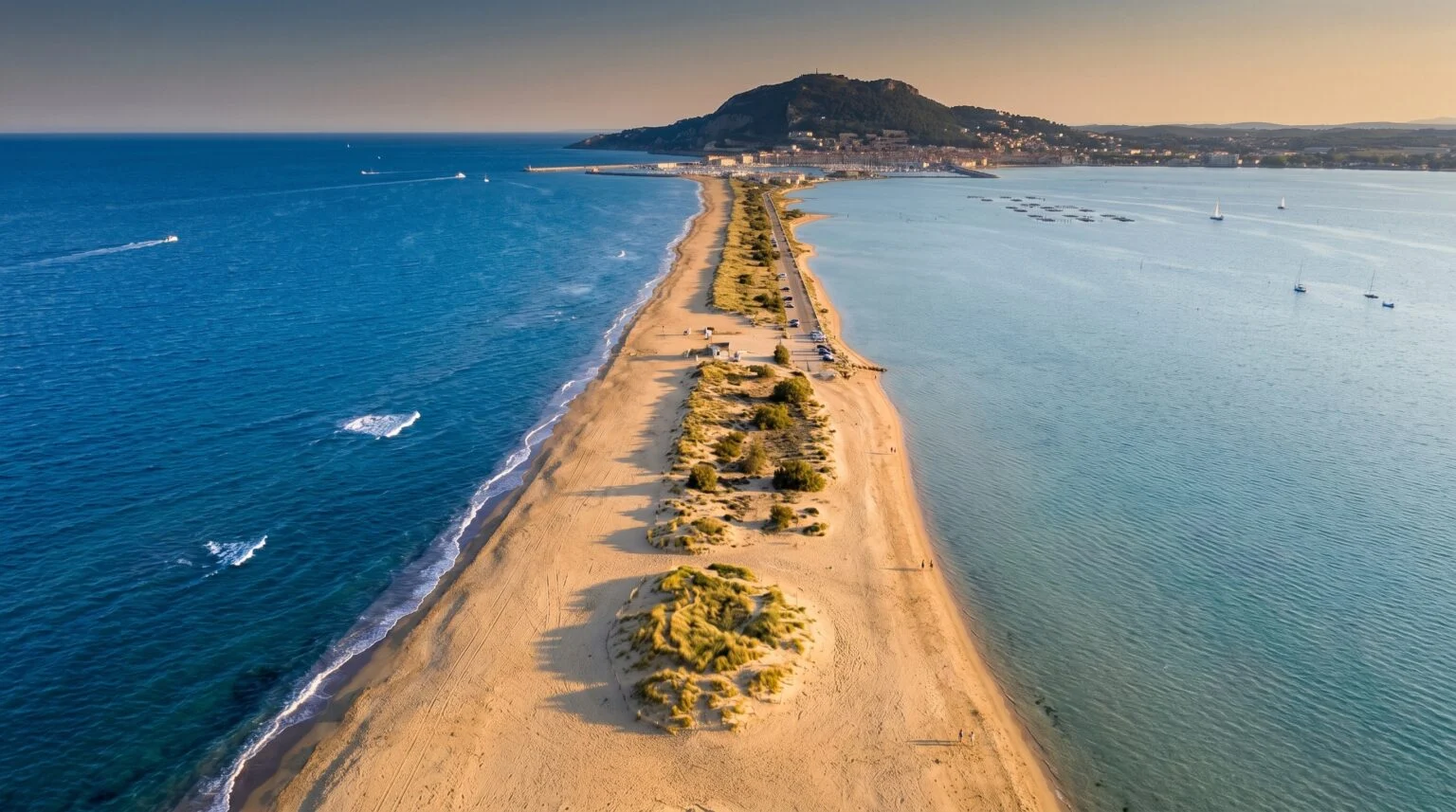
The Lido de Sète to Marseillan is not a beach: it is 12 kilometres of sandy strip separating the Mediterranean Sea from the Thau lagoon. A mere line of sand, barely a kilometre wide in places, which shields the lagoon from the swell and constitutes one of the most singular dune ridges of the French coastline.
This geographical singularity, the sea on one side, the lagoon on the other, a mere few hundred metres apart, defines the particular character of bathing at the Lido. Mediterranean waters to the south-east, the calm waters of Thau lagoon to the north-west, fine sand along the entire length.
A dune ridge designated Natura 2000
The Lido is designated Natura 2000 and protected by the Conservatoire du Littoral, which owns 500 hectares within its boundaries. This status enabled, from 2004 onwards, a major coastal erosion prevention programme: relocation of the coastal road, dune restoration, replacement of wooden fencing, and planting of marram grass. The project aimed to slow erosion of the ridge.
The site supports exceptional biodiversity: rich dune flora, including sea lily. On the fauna side, Thau lagoon attracts flamingos, herons, egrets and numerous migratory birds. Part of the ridge is access-restricted to preserve nesting sites.
The greenway and beach access
As part of this programme, a greenway has been laid out along the entire Lido, a shared pedestrian and cycle path, separated from the road, with periodic access points to the beaches. It can be traversed in approximately one hour by bicycle or over a day on foot with swimming breaks. Several car parks are positioned along the route.
The beaches are freely accessible, without the ubiquitous beach clubs. A few bars and restaurants open seasonally along the way, but the overall character remains more natural than most beaches on the Languedoc coast, one of its principal appeals for visitors seeking tranquillity.
On the lagoon side: shellfish farming and oysters
The Thau lagoon, located on the north-west side of the Lido, is one of the largest salt lagoons in France. It is also the leading production basin for oysters and mussels in the Mediterranean. Shellfish beds stretch to the horizon, particularly visible from the greenway at sunset.
The villages of Bouzigues, Mèze and Marseillan, perched on the northern and western shoreline, depend largely on this sector. Several producers offer direct tastings on the farm: Bouzigues oysters, Thau mussels, cuttlefish bourride.

Sète
Travel Book AEC CollectionWhen to visit
The best window is May to June and September to October: water still (or already) warm, moderate crowds, striking light. July and August remain the busiest months, but the 12km of beach absorbs the influx without becoming overcrowded. For birdwatchers, the mild winter (December to February) allows observation of flamingos wintering here.
Planning a stay in Sète
AEC Collection selects and represents houses and apartments in Sète, on the heights of Mont Saint-Clair and around the port. The greenway, the beaches and the shellfish restaurants can be discovered at your own pace.
By the AEC Collection team

Our properties in Sète
Exceptional chalets, villas and apartments, selected by our agents for their standing.
View the properties in Sète →