
Skiing at Zermatt and Matterhorn Ski Paradise
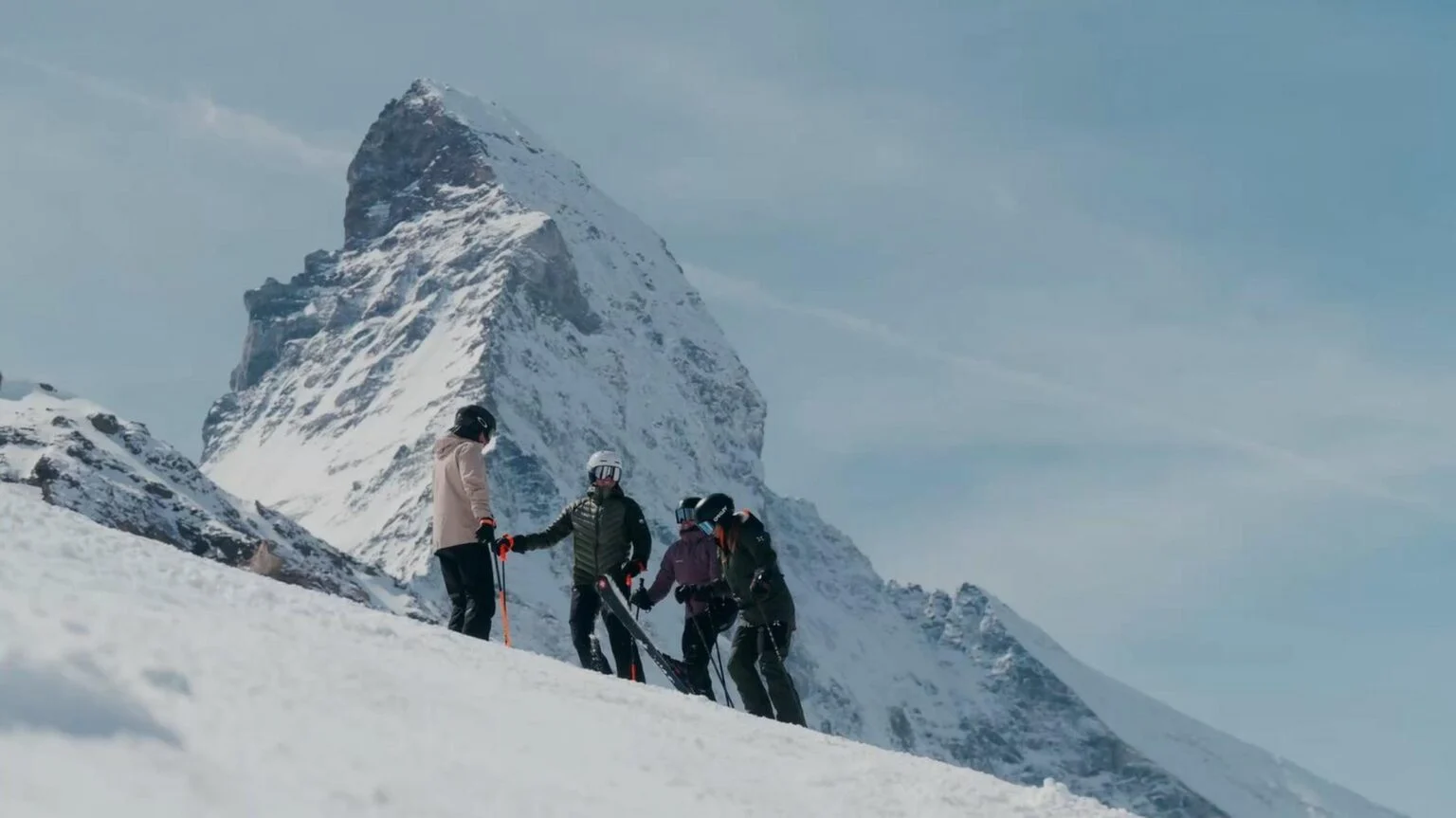
The train slows. Visp is behind, then Stalden, then Randa, and the valley narrows. Just before arrival, the Matterhorn appears, sitting there as though it had always been present. It is at this moment, so it is said, that everyone decides to return one day.
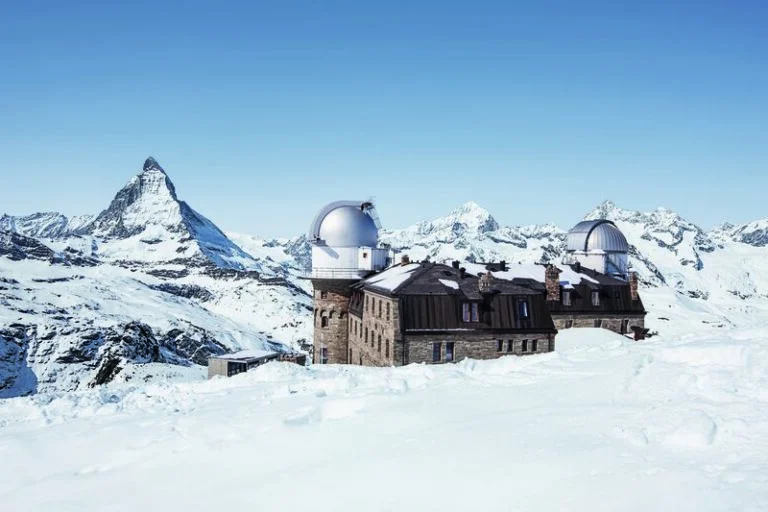
Zermatt has lived with it since 1865, the year Englishman Edward Whymper achieved the first ascent and lost four companions on the descent. Today, Zermatt has more than 6000 inhabitants, and the silhouette of the Matterhorn adorns chocolate boxes as much as jewellery sold in village shops. The mountain has become a global silhouette.
A domain between two countries
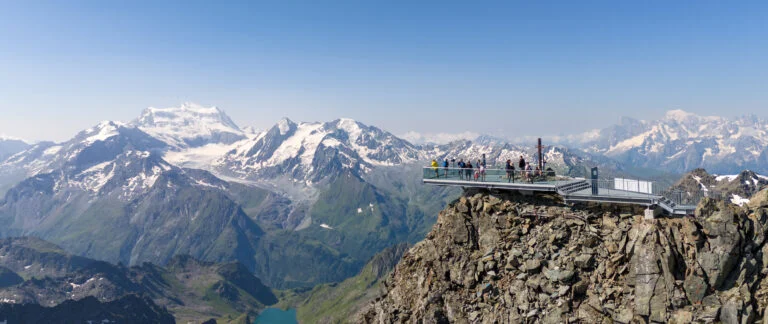
Matterhorn Ski Paradise is first and foremost a geography. On the Swiss side, you start at 1620 metres, leaving the village, and climb to 3899 metres at Klein Matterhorn, Europe’s highest point accessible by ski. On the Italian side, towards Breuil-Cervinia and Valtournenche, you cross Plateau Rosa, a ridgeline that follows the border without marking it.
In total: approximately 360 kilometres of pistes, including freeride, and 52 mechanical lifts. The distribution of pistes reveals the character of the domain: 227 kilometres of red runs, 74 of blue, 20 of black, plus 36 kilometres of yellow freeride zones. This is terrain for the confirmed intermediate skier. Beginners will find fewer suitable runs than at La Plagne or Sestrières.
Three entry gates to the domain from the village: the Gornergrat, a cog railway opened in 1898 that climbs to 3100 metres and offers the most reproduced view in the Alps; the Sunnegga, an underground funicular from 1980 that emerges at 2288 metres in four minutes; and the Matterhorn Express, a modern cable car heading towards Trockener Steg, the gateway to the glacier.
Ski in Switzerland, lunch in Italy
What regulars come to experience is that precise moment at midday. Around 12:30, you leave the north-facing slopes of Gornergrat, cross Furi, climb to Plateau Rosa, and the descent to Breuil-Cervinia begins. Twenty minutes later, you take off your skis in front of Chalet Etoile, an Italian terrace perched at 2555 metres, and pâte alla amatriciana arrives in the sunshine. On the Cervinia side, the bill is considerably more modest than at Zermatt.
Crossing the border on skis is not an administrative formality. It is a shift in worlds. On the Cervinia side, waiters sport moustaches, pistes are wider, the sky bluer and terraces noisier. On the Zermatt side, patinated wood, calm, and silent Swiss service. Many regulars sleep on the Zermatt side and lunch on the Cervinia side. It is a classic of the domain.
One rule only, and it is serious: return to the foot of Plateau Rosa before closure, around 15:00 depending on the day. Beyond that, you must descend into Italy, return by taxi on the road, a journey of approximately five hours to Täsch. It happens every season to skiers who linger at table.
Where to eat: three addresses on the mountain
Findlerhof, at 2051 metres, serves the hamlet of Findeln. It is one of the most photographed restaurants on the domain, and it has probably earned that distinction before others. You can eat outside whenever weather permits, facing the Matterhorn. The Schwery family runs the place, now with the next generation.
A little higher, at 2100 metres, Chez Vrony resembles a renovated barn more than a restaurant. This is intentional. The Julen family has been installed here since 1900, and the fourth generation still serves rösti potatoes the old-fashioned way. The menu works with valley breeders, and some of the meat and cheese comes from cattle grazing in Findeln in summer. Raw atmosphere, small terrace, grandiose view. Reserving here is an obligation, not an option.
More discreet, Adler Hitta at 2200 metres sits midway between Sunnegga and Findeln. The house built its reputation on roasting: wood-fired roasted cockerel, its speciality since 1996. It is less gastronomic than the two previous establishments and considerably more accessible.
Three hundred metres at the foot of the pistes
The village stretches from Bahnhofplatz to the foot of Winkelmatten. There are no cars. Residents confirmed the ban through votes in 1972 and 1986. Movement is by foot, horse-drawn carriage, or electric taxis. Central hotels have their own fleets, which wait at the station.
On the left bank of the Vispa, the historic hotels. The Mont Cervin Palace, opened in 1852 and owned by the Seiler family since 1867, remains the benchmark address. Five stars, approximately 150 rooms and suites. The Cervo Mountain Resort, more contemporary, plays the relaxed chic card: 54 rooms, three restaurants, direct access to the Sunnegga return piste.
For group stays, AEC Collection favours private chalets, more set apart, generally in Winkelmatten. The best offer six to fourteen bedrooms, a house manager for meals, a housekeeper, and access to the pistes by dedicated shuttle. These are the properties we represent.

Zermatt
Travel Book AEC CollectionWhen to visit
The season officially begins in late November and ends around the 1st of May. The glacier remains skiable in summer, placing Zermatt in the very select club of European resorts open 365 days a year, with Hintertux in Austria.
Lift passes have operated on dynamic pricing since winter 2018-2019: you enter your dates on the official website, and the tariff adjusts in real time according to expected attendance. Upgrading to the International pass, which includes Cervinia, pays for itself once you plan two visits to Italy during the week.
The windows we recommend to our clients: the second half of January (outside French school holidays), the first half of March (long days, terraces open), and April (glacier guaranteed, attendance fallen). December is pleasant but expensive, and snowfall remains unpredictable below 2000 metres before mid-December.
Access: three realistic options
From Geneva by train, allow 3 hours 45 minutes with a change at Visp. The Matterhorn Gotthard Bahn company opens one of Switzerland’s finest railway journeys, even more so in the morning when light cuts through the mist of the Rhône valley.
By car, you stop at the Matterhorn Terminal in Täsch, five kilometres downstream. The covered car park offers 2100 spaces, and the railway shuttle takes you to Zermatt in 12 minutes, departing every twenty minutes. The car goes no further, except with medical authorisation or professional delivery.
For groups or late arrivals, the helicopter from Sion, Geneva or Milan is an option. Air Zermatt and Air-Glaciers, based in Sion, arrange this type of flight; booking is made directly with them.
Planning a stay at Zermatt
AEC Collection selects and represents around twenty properties in Zermatt: private chalets in Winkelmatten and Riedweg, premium apartments in the village centre, suites in collective chalets with hotel services. All meet our selection criteria.
On-site concierge services (transfers, restaurant reservations, ski rental delivery, mountain guides) are provided by the property itself where available, or by the independent concierges of your choice.
By the AEC Collection team

Our properties in Zermatt
Exceptional chalets, villas and apartments, selected by our agents for their standing.
View the properties in Zermatt →